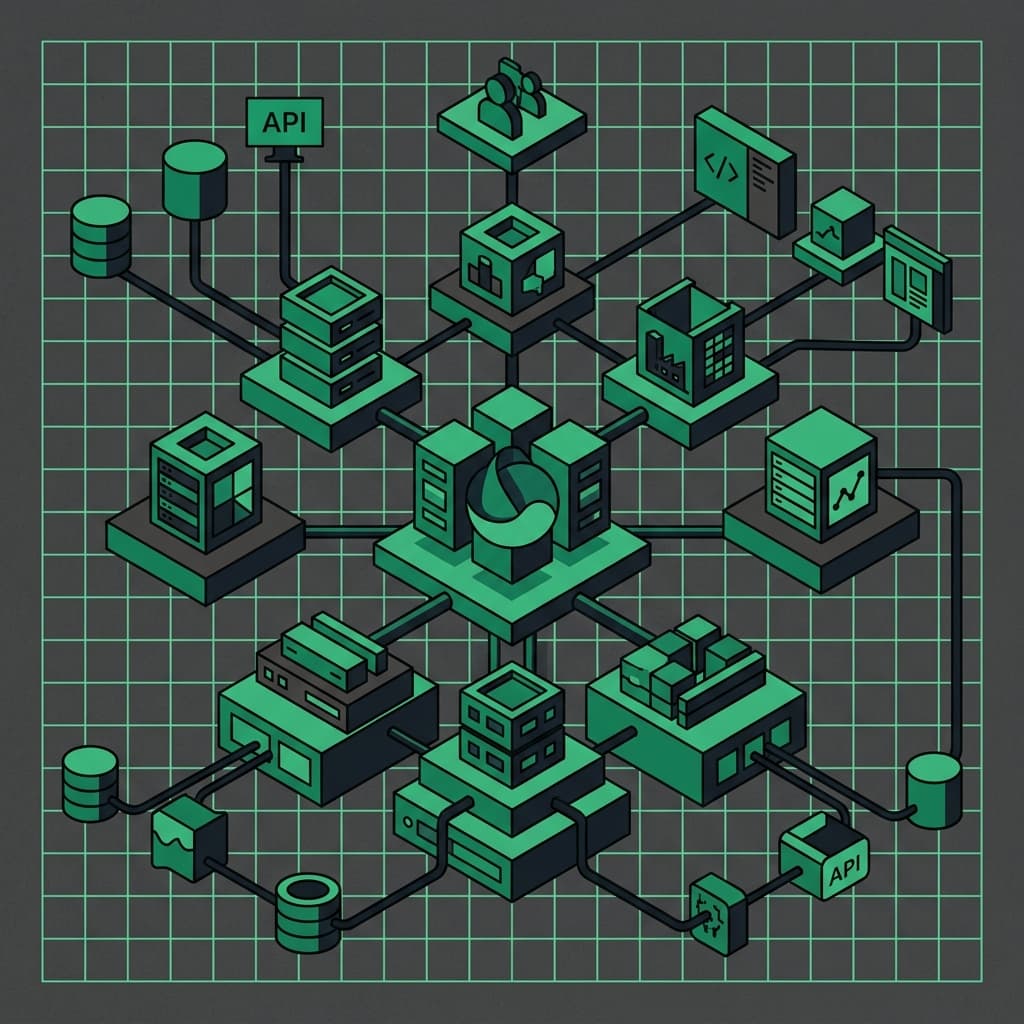
Why foundations matter.
The Root Cause
Every Power BI dashboard nobody trusts, every Copilot that hallucinates, every AI initiative that stalls — trace it back far enough and you'll find the same root cause: the data foundation wasn't there. Data scattered across Azure storage accounts. No single source of truth — or five competing "sources of truth." Governance added after problems surfaced.
Tools Aren't Solutions
Microsoft Fabric doesn't fix this automatically. OneLake doesn't fix it. Power BI definitely doesn't fix it. Tools on a weak foundation just create faster ways to get the wrong answer. Foundations take longer to build. They're less exciting than Copilot demos. But without them, everything else is noise.
What's Included
Three ways to build on Microsoft Fabric
Data Modernization
Migrate from legacy systems to Microsoft Fabric. Whether you're moving off SQL Server 2012, Azure Synapse, or Azure Analysis Services — we handle the migration with minimal business disruption.
Learn MoreFoundation Build
Build your data platform from scratch on Microsoft Fabric. Lakehouse with medallion architecture, Data Factory pipelines, Purview governance, security configuration, CI/CD with Azure DevOps — implemented production-ready from day one.
Learn MoreData Integration
Connect your source systems to Fabric. ERP, CRM, field service applications, REST APIs — we build the Data Factory pipelines that keep your Lakehouse current and consistent.
Learn MoreHow we build
Fabric foundations.
Governance From Day One
We don't build the Lakehouse and add governance later. Purview data catalog, sensitivity labels, lineage tracking, access policies — they're part of the initial implementation. Governance isn't a phase; it's a principle.
Production-Ready Architecture
We build for production, not proof-of-concept. Proper Fabric workspaces (dev/test/prod), deployment pipelines, Notebook error handling, Data Factory monitoring, and documentation. You inherit a platform that won't collapse when the consultant leaves.
Knowledge Transfer Built In
We don't create dependency. Every engagement includes architecture documentation, operational runbooks, and hands-on training for your Data Engineers and Power BI developers.
Is this right for you?
The Modernization Mandate
Legacy infrastructure approaching end-of-life. Fabric is the answer — you need a partner who can execute the migration.
Post-Acquisition Integration
You've acquired a company. You need a unified data platform in Fabric that consolidates without forcing source system changes.
The Greenfield Opportunity
You're starting fresh. No legacy constraints. You want to build on Fabric correctly the first time.
Where to start.
Foundation Assessment
Assess Azure state, design Fabric architecture, scope implementation.
Proof of Value
Demonstrate results before scaling. Implement one or two data sources and use cases.
Full Implementation
Complete Fabric foundation: Lakehouse, pipelines, Purview, security, CI/CD.